From uncovering corruption in university laboratories to turning up the heat on the dangerous global monkey-importation trade, this week brings more major developments in the campaign to end experiments on animals.
PETA Calls for Whistleblowers to Expose Corruption on University Animal Care Committees
Institutional Animal Care and Use Committees (IACUCs) are supposed to protect animals in laboratories by reviewing and approving their use in experiments. But evidence uncovered by PETA suggests that, at some universities, these committees may be stacked with industry insiders who rubber-stamp needless experiments rather than scrutinizing the harm they cause to animals.
After a legal battle, PETA obtained records showing that the University of Washington’s IACUC was improperly composed for years, with experimentation industry proponents occupying seats meant for independent members. Between 2020 and 2025, the committee approved an estimated 1,500 experiments involving thousands of animals.
They may not be the only institution where oversight has broken down—that’s why PETA is calling on whistleblowers nationwide to speak up if they believe their institution’s committee is improperly constituted or failing to protect animals.
Why this matters:
Animal care committees are meant to be a last safeguard for animals in laboratories, so when those panels are compromised, animals can be subjected to painful, unnecessary procedures with little meaningful oversight. More whistleblowers will mean more exposure for such failures and greater accountability.
Momentum Builds to Shut Down the Global Monkey-Importation Pipeline
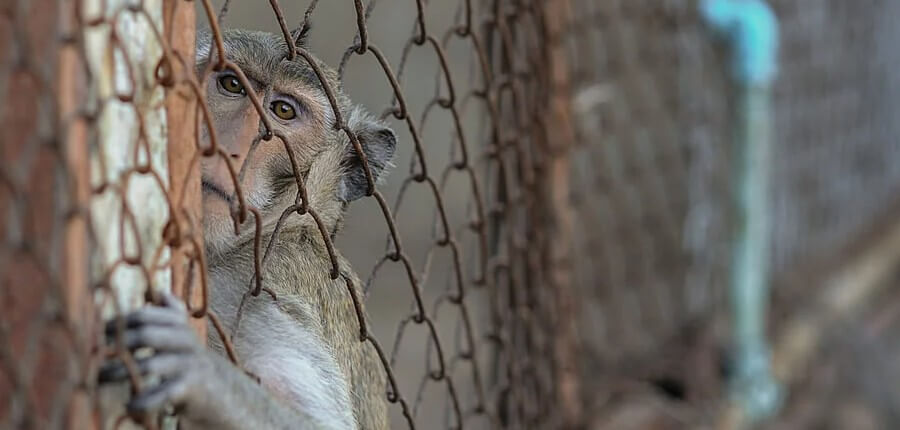
Every year, thousands of monkeys are captured and/or bred on factory farms and shipped to U.S. laboratories for painful experiments. PETA’s work to shut down this cruel pipeline is gaining more traction every day.
New York Congresswoman Nicole Malliotakis is now urging U.S. Health and Human Services Secretary Robert F. Kennedy Jr. to halt monkey imports for laboratory testing after meeting with PETA representatives and learning more about the vile trade.
The monkey-importation industry is not only cruel but also puts lives beyond laboratories at risk. Imported primates can carry pathogens, including tuberculosis and other dangerous infectious diseases that can threaten entire communities.
Meanwhile, long-tailed macaques—one of the most commonly imported species—are already classified as endangered, in part because of demand from laboratories.
Why this matters:
PETA’s work is exposing how the monkey-importation industry harms animals, threatens entire ecosystems, and puts lives even outside of laboratories at risk. Each new policymaker who joins the call to end primate imports brings the U.S. closer to shutting down this dangerous pipeline for good.
New PETA Podcast Pulls Back the Curtain on the Monkey-Experimentation Industry
For those seeking a deeper look at the global monkey pipeline, PETA’s podcast episode offers insight from one of the organization’s leading experts.
This episode features Dr. Lisa Jones-Engel, PETA’s chief science advisor on primate experimentation, who has spent decades studying primates and exposing the harms of the international monkey trade. She explains in detail how monkeys are captured, transported, and used in experiments—and why the system is scientifically outdated and ethically indefensible.
Listeners also hear how PETA’s investigations, scientific research, and advocacy are helping drive the growing movement away from primate experimentation and toward state-of-the-art, non-animal research methods.
Why this matters:
By helping experts like Dr. Jones-Engel expose the dark realities of the monkey-experimentation industry, PETA is helping more people understand why it must end.
The Bottom Line
Each investigation, policy challenge, and public conversation moves the world closer to a future in which animals are no longer used as laboratory tools—and where better science leads the way.