Three days before her scheduled May 11-14 trial for violating a court order barring her from entering an agricultural event, animal advocate Jenny McQueen’s lawyer, Gary Grill, called and said, “I have bad news.” The Crown prosecutor had informed him that Jenny’s trial had been canceled because “there’s no reasonable prospect of a conviction.”
For Jenny, this was bittersweet because, in her own words, “all an animal rights activist ever wants is a platform for the animals, even if it means their own freedom is on the line. My lawyer planned on showing all the disturbing footage I’d taken over the years inside the Canadian animal agriculture industry.”
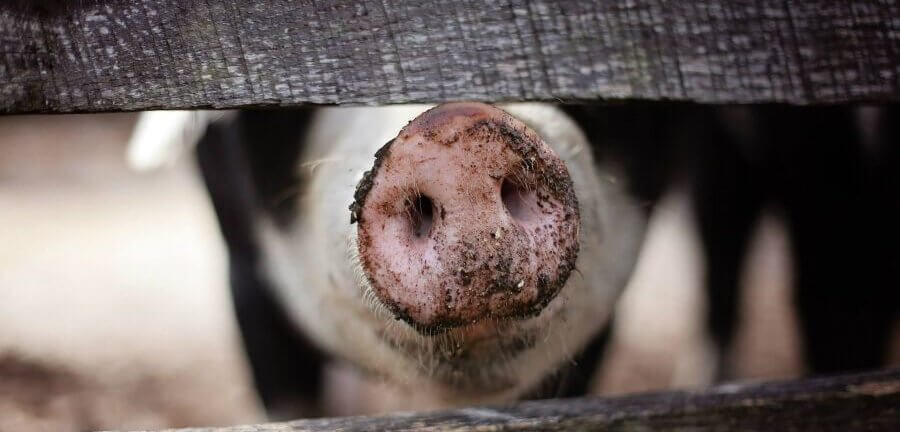
“The animals on display at the CNE bear no relation to their lived experiences,” Jenny explained. “Their journey to the slaughterhouse, their terror when facing slaughter—especially pigs herded into gondolas that lower them into carbon dioxide ‘stunning’ gas—their screams and struggles have all been captured on undercover cameras. And the industry still calls this humane.”
While the trial will not move forward, the truth Jenny sought to expose remains undeniable—and the animals still need advocates willing to speak out for them.
Compassion for Pigs on Trial – Again: The Case of Jenny McQueen
April 29, 2026
Toronto’s annual Canadian National Exhibition has evolved from its 19th-century agricultural orientation into a modern smorgasbord of entertainment. Its iconic ‘Let’s Go to the Ex” jingle signals the end of summer with air shows, concerts, carnival rides, and ever more inventive fair food. Farm exhibits remain part of the mix, too carefully staged reminders of Canada’s agricultural industries, presented as benign, even bucolic.
On August 18th, 2024, animal liberation activist and fellow PETA member, Jenny McQueen, who was banned by a 2022-2025 peace bond that restricts her presence at farms and livestock facilities, attended The Ex, believing it did not qualify as an agricultural event. Once inside, Jenny went directly to Ontario Pork’s “Pig Mobile,” a live exhibit that portrays farmed pigs as comfortably housed and nicely treated. Before she could install an informational banner challenging that depiction, she was arrested and charged with disobeying a court order. The banner was never mounted.
Days later, Toronto police charged a 16-year-old with killing a cat and harming raccoons. Yet, in January 2026, Ontario Court Justice Seth Weinstein stayed those charges, blaming “the failure of the Crown and police to coordinate their efforts to provide necessary disclosure. … The police placed no priority on this case.” The contrast is unsettling. A peaceful act intended to inform the public about animal suffering moved unobstructed through the legal system, while serious violence against animals did not.
This imbalance reveals a deeper problem: animals are failed not only when cruelty is ignored, but also when opportunities for prevention are missed. PETA has long emphasized the importance of humane education through our TeachKind program, reaching young people early with lessons that cultivate empathy and respect for animals, helping interrupt patterns of violence before they escalate.
Jenny’s trial is set for May 11-14, 2026, and may well need those four days. She will mount a spirited and evidence-laden defense of her innocence, from challenging the legitimacy of the charge to providing a mountain of damning evidence supporting the truth of her unmounted banner’s denunciation of the reality of Canadian pig farming.
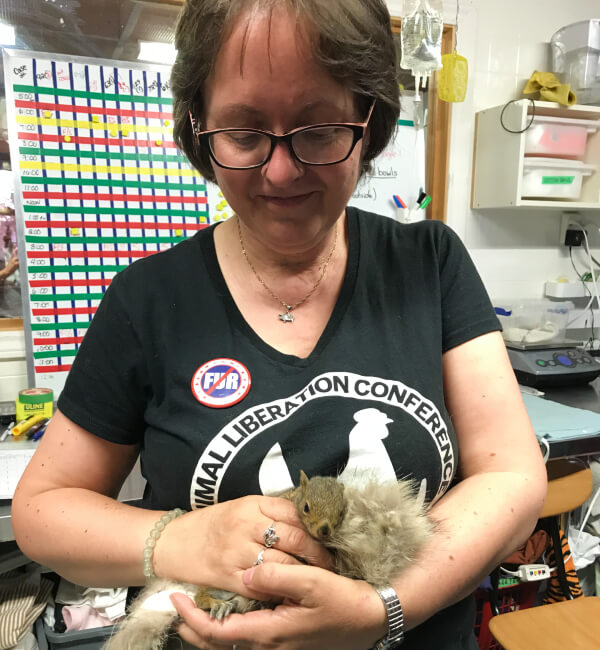
Public reaction has already been strong. Jenny’s post-arrest petition struck a chord. It read in part: “On display at the Canadian National Exhibition (CNE), animals are shown bedded in straw and seemingly comfortable living conditions. But this is a facade. I bear witness to the concealed truth … inside pig farms, I’ve seen the dire conditions they endure. … On their way to slaughterhouses, the sight of them up close is heartbreaking. I’ve stood beside the gas chambers where pigs were lowered, their lungs burnt by the gas. They scream and writhe around as they lose consciousness.”
In 2025, the Pig Mobile was withdrawn from the CNE altogether. Ontario Pork later acknowledged growing concern about “negative public relations incidents” at major events.
Indeed. When peaceful truth-telling is treated as a crime, and cruelty is not, something is deeply amiss. Thanks to persistent advocates and the supporters who stand behind them, the truth about pig farming continues to surface, despite determined efforts to keep it hidden.
Elizabeth Abbott is an award-winning author, a Senior Research Associate at the University of Toronto’s Trinity College, a PETA supporter, and a member of Toronto Pig Save. She was also an Animal Protection Party of Canada candidate in the 2015 and 2019 federal elections. Her most recent book is Dogs and Underdogs: Finding Happiness at Both Ends of the Leash.