

Social-emotional learning (SEL) has become an increasingly important part of education, helping students develop skills such as empathy, self-awareness, emotional regulation, and responsible decision-making. But for many educators, the challenge isn’t understanding the value of SEL. It’s finding meaningful ways to engage students in it.
PETA’s TeachKind team knows that animals can provide that connection.
In a recent video, TeachKind’s Senior Program Manager, Lisbet Chiriboga, recalls a classroom experience from her years as a teacher. Students were researching animal-related topics, including puppy mills and animal protection laws. After watching a video showing dogs being rescued from a puppy mill, one student became emotional. When another child teased them for crying, Chiriboga paused the discussion and reminded the class that expressing compassion isn’t something to be embarrassed about, stating, “It’s OK to cry. It just means you care and that you’re compassionate.”
The response was immediate. Other students spoke up to share that they, too, had been affected by what they had seen. What could have been a moment of discomfort became a moment of connection.
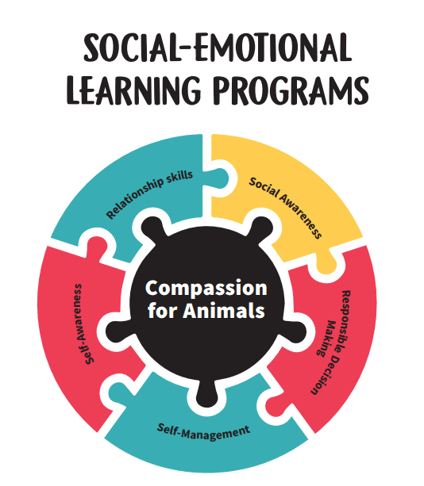
Experiences like this help explain why humane education can be such a powerful tool for social-emotional learning. Children naturally care about animals. They feel concern when animals are suffering and joy when animals are helped. Those emotional responses create opportunities for students to reflect on their own feelings, understand others’ experiences, and develop empathy.
Importantly, these lessons extend far beyond animals. When students ask why an animal was neglected, how that animal may have felt, or what they can do to help, they are practicing the same skills that help them build healthy relationships, navigate conflict, and make thoughtful decisions throughout their lives.
Compassion fosters curiosity. When students care about a subject, they become more engaged learners. They ask questions, seek answers, and begin thinking critically about fairness, responsibility, and the impact of their choices.
For PETA, that connection has always been central to humane education. Encouraging young people to recognize animals as thinking, feeling individuals helps foster the empathy and respect that can positively influence all areas of their lives.
By helping students connect with animals’ experiences, educators can create classrooms where empathy is valued, emotions are acknowledged, and kindness becomes a shared experience. And in a world that often seems to need more understanding and compassion, those lessons may be among the most important of all.
Educators interested in incorporating humane education into their classrooms can explore TeachKind’s free social-emotional learning resources and activities available online here. We hope you’ll share this post with anyone in your life who works with kids.