
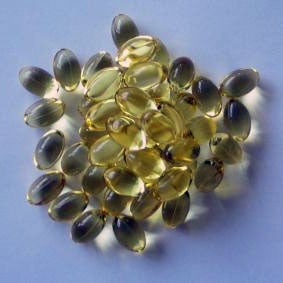
 Fed up with hearing about the supposed health benefits of eating oily fish or taking fish-oil supplements? Your ears may be off the hook permanently. That’s because an article published in the British newspaper The Telegraph cites new draft guidance from the National Institute for Health and Care Excellence that suggests that the impact of eating a diet rich in oily fish on preventing further heart attacks or strokes “could be minimal.” The new guidance is the latest of several studies that have debunked the health benefits that fish oil has on heart patients, including one in the prestigious New England Journal of Medicine involving more than 12,000 people.
Although fish oil has been pushed as a healthful preventive for everything from heart disease to cognitive degeneration, the fact is that because fish contains high levels of cholesterol and saturated fats and is often contaminated by chemical pollutants, it is the last thing that a health-conscious person should stick a fork into. In addition to bacterial contamination, fish often contains dangerous PCB toxins, [] which have been linked to cancer, as well as mercury, which is known to cause birth defects and brain damage. What’s scarier, according to an article on ChicagoTribune.com, “The government does not seize high-mercury fish that violate U.S. limits. Regulators do not even inspect seafood for mercury—not in ports, processing plants or supermarkets.”
Although omega-3 essential fatty acids can reduce the blood’s level of triglycerides, which play a role in heart disease, the omega-3s found in fish are highly unstable and tend to decompose and unleash dangerous free radicals, which are linked to cancer, arteriosclerosis, and premature aging. So what’s a vegan or vegetarian who’s concerned about getting adequate omega-3 to do? Simple: Stick to that healthy vegan diet.
According to researchers at the University of Arizona, the omega-3s found in vegetables—including walnuts, pecans, flaxseeds, broccoli, spinach, and soybeans—are more stable than those in fish. In addition, plant-based omega-3s are often coupled with antioxidants, which can help neutralize free radicals. The Physicians Committee for Responsible Medicine also recommends these foods as well as oils that are high in omega-3, which include flaxseed, linseed, and canola.
With study after study sinking the myth that fish oil improves heart or brain function, we have more reasons than ever to leave fish—who are sensitive and intelligent animals—in the water, where they belong.